
Ryanair Bag Sizer: How It's Measured & How to Pass Every Time

What is the Ryanair bag sizer?
The Ryanair bag sizer is a metal frame at every boarding gate that tests whether your bag fits the airline's free under-seat allowance of 40 × 30 × 20 cm. If your bag doesn't slide into the frame cleanly, you'll be asked to pay £70–£75 to check it into the hold. The sizer measures all three dimensions simultaneously — height, width, and depth — so a bag that's even slightly over on one side won't pass.
Unlike some airlines that eyeball cabin luggage, Ryanair uses the sizer consistently. Gate staff watch for bulging bags, overstuffed pockets, and anything that looks borderline. If there's doubt, they'll ask you to test it.
How the sizer actually measures your bag
The frame is a rigid box with internal dimensions of 40 × 30 × 20 cm. Your bag must slide in without force, and the top must sit flush or below the opening. Ground staff look for:
- Protruding handles or straps that prevent the bag sitting flat
- Bulging sides caused by overpacking
- Rigid structure that won't compress, even slightly
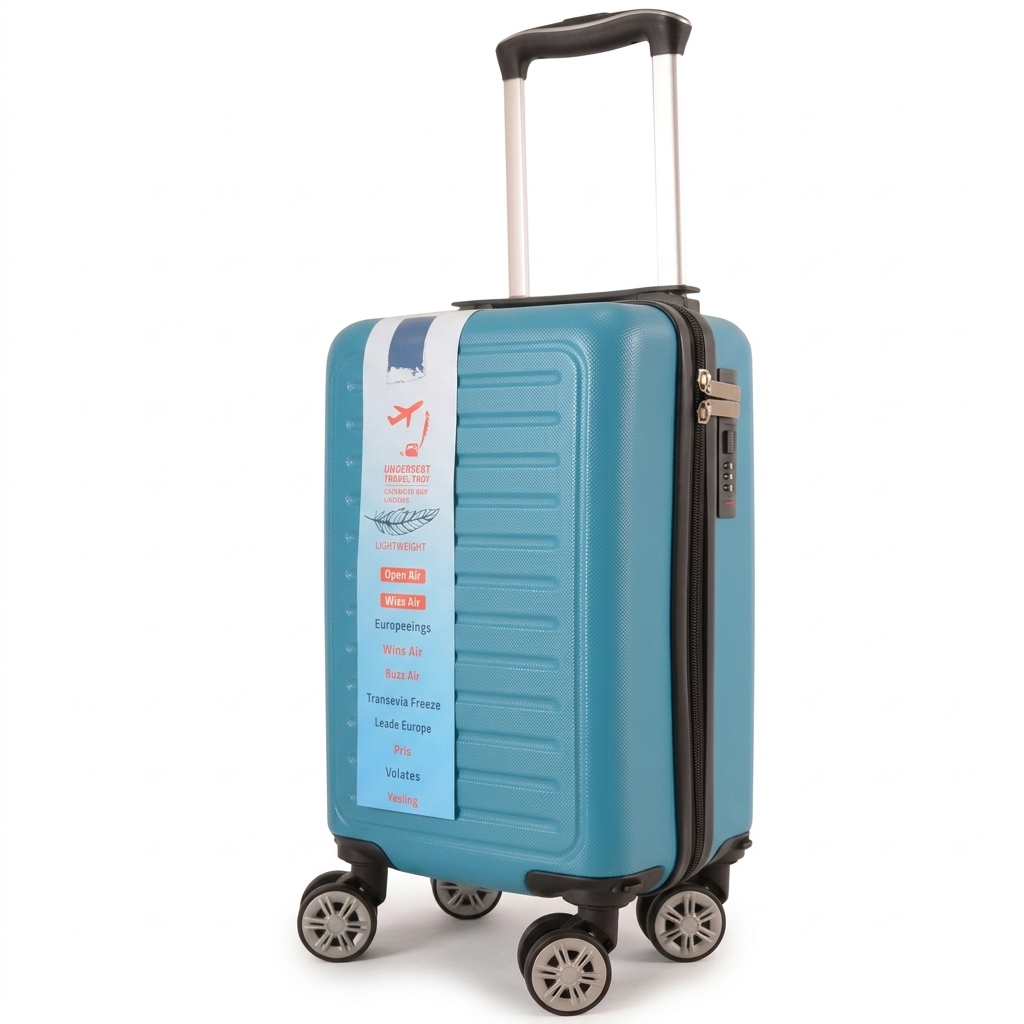
- Wheels or feet that add extra height or depth
If any part of your bag sticks out — even a corner — it fails. The sizer doesn't care if your bag is soft or if you could squash it down; it must fit as packed, with nothing hanging over the edge.
What happens if your bag doesn't fit
You'll be directed to the oversized baggage desk and charged £70–£75 to check the bag into the hold. You won't be allowed to repack at the gate or remove items to make it fit — once it's been tested and failed, the fee applies.
If you're travelling on Priority & 2 Cabin Bags (Priority & 2 Cabin Bags add-on), your larger cabin bag goes in the overhead locker and isn't tested in the sizer. But your smaller under-seat bag still must pass if staff decide to check it.
You can avoid the whole lottery by choosing the right bag from the start or reading up on Ryanair's full hand luggage rules.
How strict is Ryanair with the bag sizer?
Very. Ryanair enforces the sizer more consistently than most European budget carriers, especially on busy routes and peak-season flights when overhead locker space fills quickly. Gate staff have targets for checked bags, and the sizer gives them an objective measure.
That said, not every passenger is tested. Staff typically check:
- Bags that look obviously oversized
- Passengers carrying two bags without Priority boarding
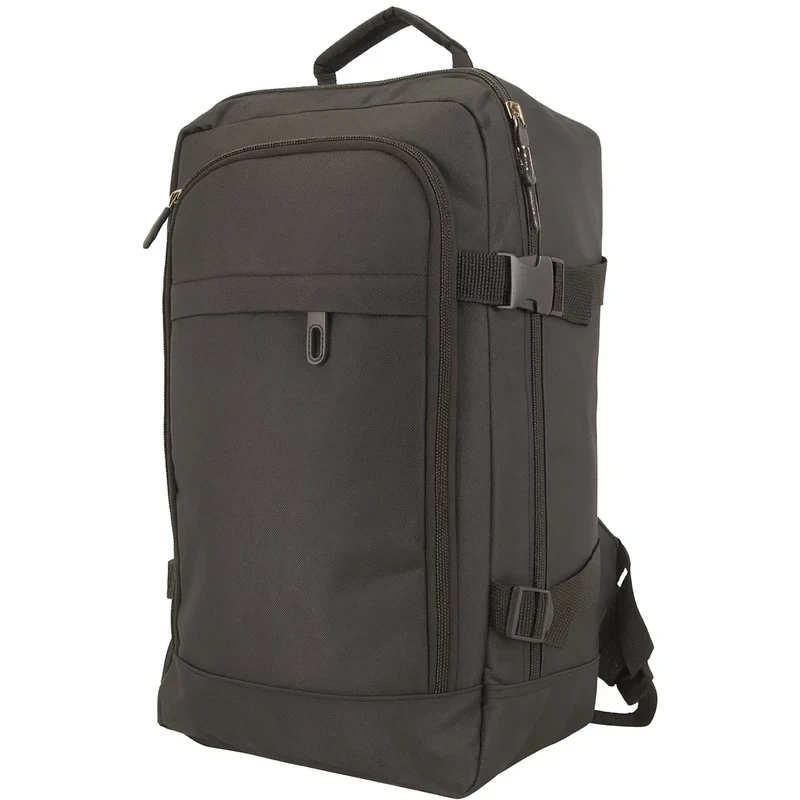
- Anyone with a rigid suitcase or backpack with external frames
- Late boarders when overhead space is already full
If your bag is clearly within the limits and you're not drawing attention, you'll usually walk straight through. But if there's any doubt, expect to be asked to test it.
Bags that pass the Ryanair sizer every time
| Bag | Dimensions | Why it works |
|---|---|---|
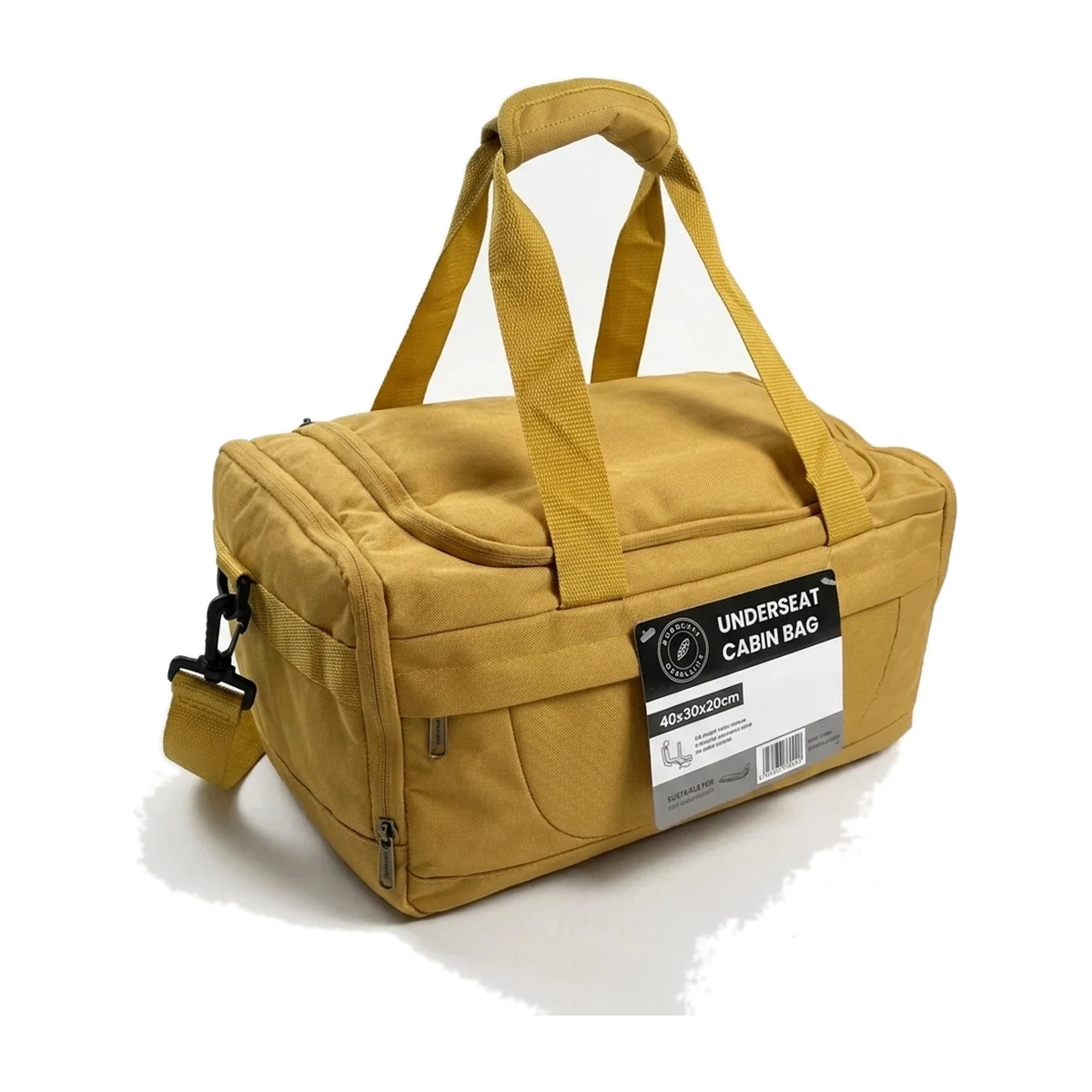
| Bordlite Underseat Cabin Bag 40×30×20 — Yellow | 40 × 30 × 20 cm | Exact-fit design, soft sides, no protruding hardware |
| Ryanair Underseat Cabin Travel Bag | 40×25×20 cm | Slim profile, compresses easily, tested on 200+ Ryanair flights |
| Easyjet Underseat Cabin Bag | 40 × 30 × 20 cm | Multi-airline fit, low centre of gravity, reinforced base |
All three are designed to sit cleanly in the sizer with room to spare. They're soft-shell, so they compress slightly if needed, and none have external frames, wheels, or rigid panels that add bulk.
If you're packing for a weekend trip in one under-seat bag, these dimensions give you roughly 16–20 litres of usable space — enough for three days of clothes, toiletries, and a tablet.
How to pack so your bag passes
- Pack flat, not tall. Distribute weight evenly so the bag doesn't bulge at the top or sides.
- Compress soft items. Use packing cubes to compress clothes and eliminate air pockets.
- Keep external pockets empty. Anything in a side or front pocket adds to the measured dimension.
- Remove bulky items. Coats, travel pillows, and duty-free bags don't count as part of your one free bag, so carry them separately.
- Test your bag at home. Measure a box to 40 × 30 × 20 cm and see if your packed bag slides in cleanly.
If you're travelling for a full week without checked luggage, you'll need to be ruthless with what you bring — but it's entirely possible with the right system.
Ryanair vs other UK airlines
Here's how Ryanair's free under-seat allowance compares to other carriers:
| Airline | Free under-seat bag | Cabin bag (overhead) | Included free? | Gate fee |
|---|---|---|---|---|
| Ryanair | 40 × 30 × 20 cm | 55 × 40 × 20 cm, up to 10 kg | No — Priority & 2 Cabin Bags add-on | £70–£75 |
| easyJet | 45 × 36 × 20 cm, up to 15 kg | 56 × 45 × 25 cm, up to 15 kg | No — Paid add-on, FLEXI or Inclusive Plus fare, or easyJet Plus membership | £48–£60 |
| Jet2 | 40 × 30 × 20 cm | 56 × 45 × 25 cm, up to 10 kg | Yes | No gate fine — an oversize or overweight bag goes in the hold, and gate charges cost more than pre-booking |
Ryanair's under-seat dimensions are the most restrictive of the major UK budget carriers, but the sizer is also the most consistently enforced. If you're flying Jet2 instead, you get the same under-seat size but a free overhead cabin bag as well — no Priority fee required.
Should you buy Priority to avoid the sizer?
If you need to carry more than 40 × 30 × 20 cm, yes. Priority & 2 Cabin Bags (Priority & 2 Cabin Bags add-on) lets you bring a second bag up to 55 × 40 × 20 cm, up to 10 kg, which goes in the overhead locker and isn't tested in the sizer.
Whether it's worth it depends on your route and season. We've broken down the full cost of Ryanair Priority for UK travellers, and it usually pays for itself if you're flying more than twice a year or travelling with a family.
If you don't buy Priority and try to bring an oversized bag, you'll pay £70–£75 at the gate — far more than Priority costs in advance.
What to do if you're borderline
If your bag is right on the limit and you're not sure it'll pass:
- Wear your bulkiest items. Coats, hoodies, and boots don't count towards your bag allowance.
- Carry a separate small item. A slim laptop sleeve or a shopping bag with duty-free won't be counted as a second bag if it's obviously small.
- Compress the bag before boarding. Zip it fully, press down on the top, and check it doesn't spring back.
- Board early. If overhead space is still available, gate staff are less likely to test bags rigorously.
And if you're ever in doubt, measure your bag at home. A £10 compliant under-seat bag is cheaper than one gate fee.
For peace of mind on every Ryanair flight, shop our range of tested under-seat cabin bags — all designed to pass the sizer first time.
FAQ
Q: Can I squash my bag into the Ryanair sizer if it's soft?
A: No. The bag must slide in as packed, without force. Gate staff won't let you compress or manipulate it during the test — if it doesn't fit cleanly, it fails.
Q: Do Ryanair check every passenger's bag at the gate?
A: Not every passenger, but staff check anyone whose bag looks borderline or oversized. If you're carrying a rigid case, a bulging backpack, or two bags without Priority, expect to be tested.
Q: What if my bag passed the sizer on my outbound flight but fails on the return?
A: It depends on how you've packed it. If you've overstuffed the bag with souvenirs or duty-free, it may no longer fit even if the empty bag is compliant. Gate staff enforce the rule on each flight independently.
Q: Can I measure my bag at home to check if it'll pass?
A: Yes. Build or mark out a box of 40 × 30 × 20 cm and test your packed bag. If it slides in with a little clearance on all sides, you'll pass the sizer at the gate.
Q: Does Ryanair weigh under-seat bags?
A: Rarely. Ryanair doesn't publish a weight limit for the free under-seat bag, and gate staff focus almost entirely on dimensions. But if your bag is visibly heavy or you're struggling to lift it, you may be asked to weigh it — see which airlines actually check cabin bag weight for the full picture.
Airline baggage rules and fees change frequently and can vary by route, travel date and when you book. Always check the airline's current official baggage policy before travelling.
Also worth reading: Ryanair Baggage Fees: What You Pay and When to Avoid It