
Power Bank Hand Luggage Rules: What UK Travellers Can Carry

Can You Take Power Banks in Hand Luggage?
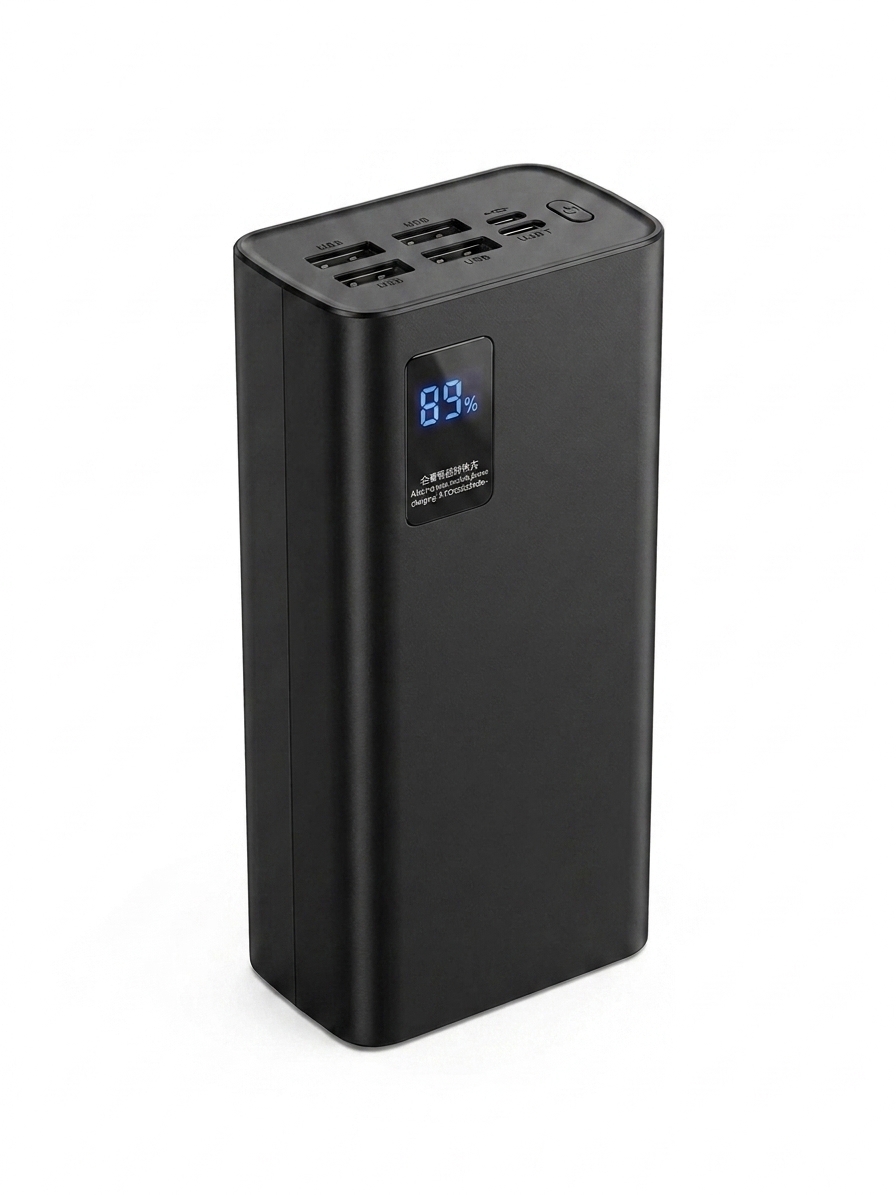
Yes — but only in your cabin bag, never in the hold. Power banks contain lithium-ion batteries, which present a fire risk if damaged. UK and EU aviation rules require all spare lithium batteries and portable chargers to travel in the cabin, where crew can respond quickly to any thermal event. Most consumer power banks (under 100 Wh) are allowed without prior approval, though capacity limits vary by airline.
Understanding Watt-Hour (Wh) Ratings
Airlines measure power bank capacity in watt-hours (Wh), not milliamp-hours (mAh). To convert:
Wh = (mAh × voltage) ÷ 1000
Most power banks use 3.7V cells. A typical 20,000 mAh charger is:
(20,000 × 3.7) ÷ 1000 = 74 Wh
That falls comfortably within the standard 100 Wh cabin limit. If the Wh rating isn't printed on your device, check the manufacturer's documentation or contact them directly — security staff may refuse a power bank with no visible rating.
Airline Limits: What You Can Actually Carry
| Capacity | Ryanair, easyJet, Wizz Air | British Airways, Jet2, TUI | Approval Required? |
|---|---|---|---|
| Under 100 Wh | Allowed in cabin bag | Allowed in cabin bag | No |
| 100–160 Wh | Allowed with airline approval | Allowed with airline approval | Yes — contact airline in advance |
| Over 160 Wh | Prohibited | Prohibited | N/A |
| Quantity | Usually 2 per passenger | Usually 2 per passenger | Check airline policy |
Most budget carriers permit two devices under 100 Wh per passenger. Full-service airlines often allow the same, but policies differ for premium cabins. Always check your specific airline's dangerous goods page before packing.
Laptops, Tablets and Other Lithium Devices
Laptops and tablets are allowed in hand luggage without restriction, provided their internal batteries don't exceed 100 Wh — which covers nearly all consumer models. Spare laptop batteries (the removable kind) must be individually protected against short-circuit, ideally in original packaging or with taped terminals.
You cannot pack laptops or tablets in checked hold baggage on flights to or from the UK. They must travel in your 40 × 30 × 20 cm or 45 × 36 × 20 cm cabin bag, where they're accessible during security screening.
If you're carrying a high-capacity laptop battery (e.g. a professional workstation with a 99 Wh cell), keep the specs handy — security may ask for proof.
Charging Devices On Board
Most UK airlines prohibit charging power banks or laptops during flight. USB sockets (where fitted) are for low-draw devices like phones or e-readers. Charging a large power bank can trip circuit breakers or create a thermal risk in the confined cabin environment.
Permitted:
- Phones, Kindles, small Bluetooth headphones
- Devices plugged into airline-provided USB or mains sockets
Prohibited:
- Power banks being recharged from any socket
- Laptops on charge during taxi, take-off or landing
- Any device that becomes hot to the touch
Crew have the authority to confiscate any electronic device they deem unsafe. If your phone or charger overheats, inform cabin crew immediately and switch it off.
Cables, Chargers and Adapters
Standard USB cables, plug adapters and wall chargers (without integrated batteries) can travel in either hand luggage or the hold. There's no safety restriction, but it's far more practical to keep them in your underseat bag — you'll want them at the gate or in your hotel as soon as you land.
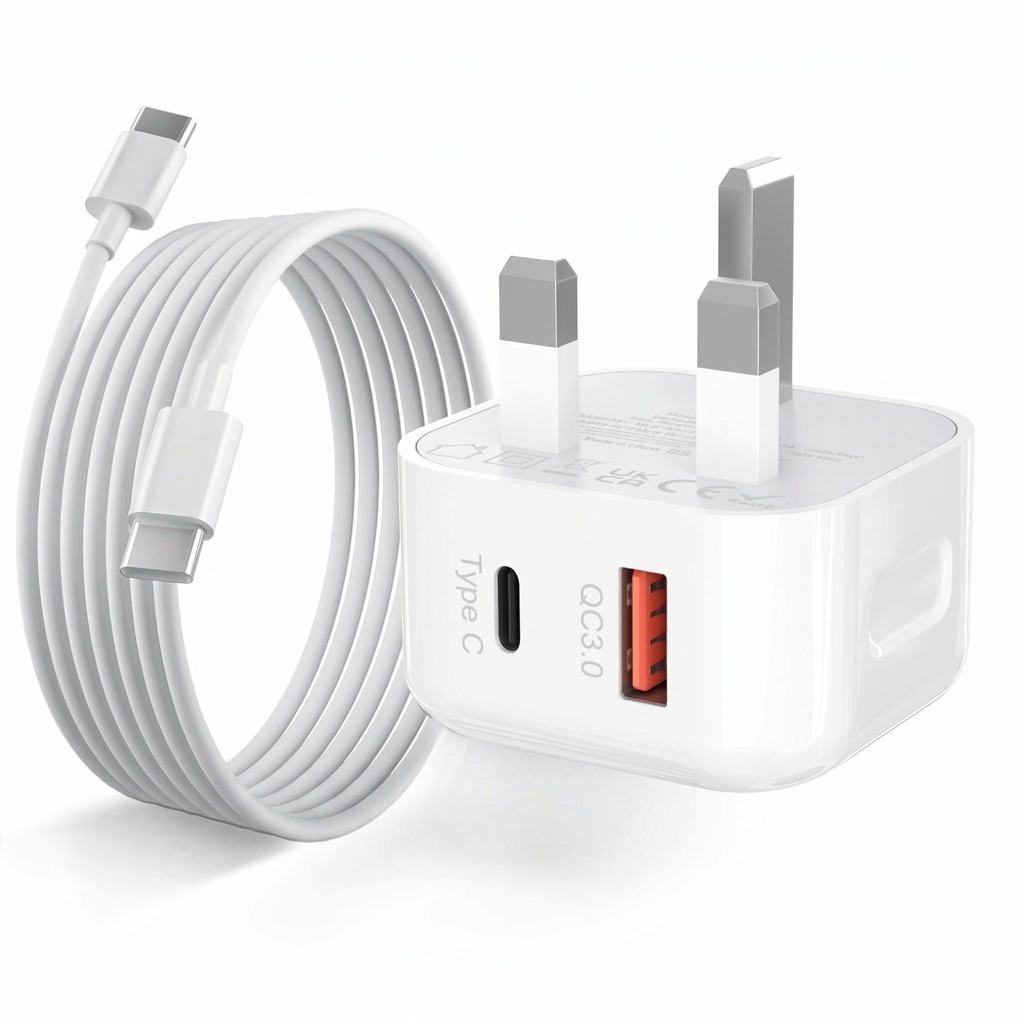
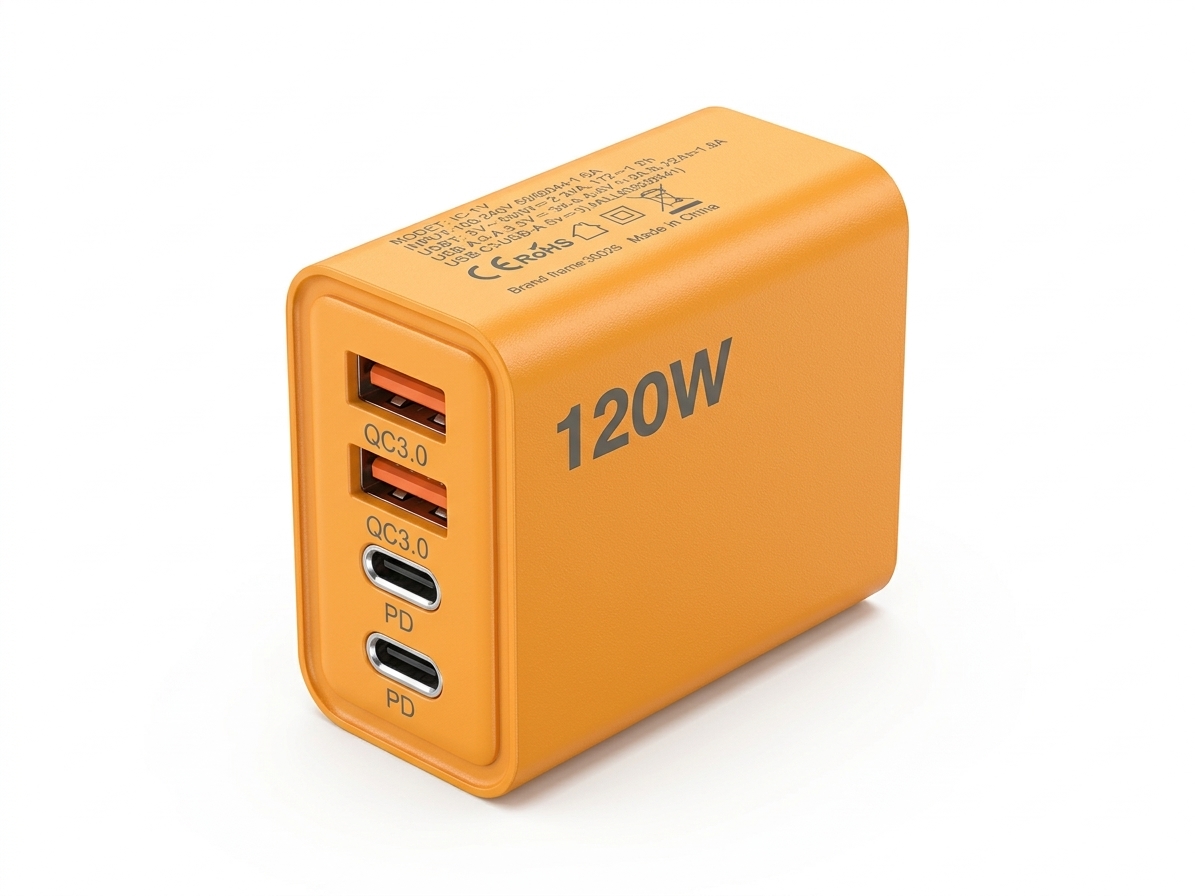
Multi-port chargers (the kind with a mains plug and several USB-A or USB-C outputs) are fine in cabin bags. GaN (gallium nitride) fast chargers are compact, lighter than older silicon models, and particularly useful if you're travelling with just a 40 × 30 × 20 cm allowance.
If you're flying long-haul or need to work in the airport lounge, a small pouch or packing cube keeps your cables tidy and easy to access during security screening.
Security Screening: What to Expect
UK airports require you to remove laptops and large tablets (typically over 16 cm in any dimension) from your bag and place them in a separate tray. Power banks can usually stay inside, but officers may ask you to present them if the X-ray image is unclear.
From 2026, new CT scanners at major UK airports will allow laptops and liquids to remain in bags, but the rollout is gradual. Until your departure airport confirms otherwise, assume you'll need to unpack electronics. Pack them near the top of your bag to speed up the process.
If you're carrying multiple devices — laptop, tablet, power bank, camera batteries — be prepared to explain their purpose. Business travellers with high-capacity batteries (80–100 Wh) should carry a printed spec sheet or email confirmation from the manufacturer.
For more on optimising your cabin bag layout, see our guide to maximising underseat bag space.
What Happens If Your Power Bank Is Confiscated?
Security will reject any power bank that:
- Exceeds the airline's Wh limit
- Has no visible capacity rating
- Shows physical damage (swelling, dents, exposed cells)
- Is packed in checked hold baggage
You won't get it back. There's no post-security collection point for lithium batteries. If you're unsure whether your charger complies, leave it at home or buy a certified replacement before your trip.
Our travel accessories range includes combination padlocks and organisers.
Packing Electronics Efficiently
If you're flying with just a free underseat bag (40 × 30 × 20 cm on Ryanair, 45 × 36 × 20 cm on easyJet), every cubic centimetre counts. Here's how to fit a laptop, charger and power bank without sacrificing clothing:
- Use a padded laptop sleeve inside your main bag rather than a separate laptop bag — it saves one item against your allowance
- Wind cables inside a glasses case or small zip pouch to prevent tangling
- Position the laptop flat against your back if using a backpack — it protects the device and keeps the bag's profile slim
- Pack the power bank and charger in an outer pocket for quick access at security
The Ryanair Underseat Cabin Travel Bag (40 × 25 × 20 cm) has a dedicated padded compartment that fits a 15-inch laptop and leaves room for a weekend's clothing. The Easyjet Underseat Cabin Bag (40 × 25 × 20 cm) offers similar protection with a reinforced base.
For a longer trip where you need more structure, the Cabin Backpack 40×25×20 Grey Trim — Blue is the more structured option in the same 40 × 25 × 20 cm footprint.
Read our full walkthrough on packing a four-day trip in a 40×30×20 underseat bag to see how electronics fit alongside clothing and toiletries.
Comparison: UK Airline Electronics Policies
| Airline | Free under-seat bag | Cabin bag (overhead) | Included free? | Gate fee |
|---|---|---|---|---|
| Ryanair | 40 × 30 × 20 cm | 55 × 40 × 20 cm, up to 10 kg | No — Priority & 2 Cabin Bags add-on | £70–£75 |
| easyJet | 45 × 36 × 20 cm, up to 15 kg | 56 × 45 × 25 cm, up to 15 kg | No — Paid add-on, FLEXI or Inclusive Plus fare, or easyJet Plus membership | £48–£60 |
| British Airways | 40 × 30 × 15 cm, up to 23 kg | 56 × 45 × 25 cm, up to 23 kg | Yes | No gate fine — oversized bags are moved to the hold |
All three permit laptops and power banks under 100 Wh in cabin baggage. The key difference is baggage weight: 40 × 30 × 15 cm, up to 23 kg and 56 × 45 × 25 cm, up to 23 kg on British Airways give you far more margin for heavy tech than Ryanair's 10 kg overhead allowance.
If you're carrying camera gear, a laptop and a power bank, consider whether a full-service carrier's included baggage saves you from buying Priority & 2 Cabin Bags add-on or risking a £70–£75 penalty at the gate. We break down the numbers in our Jet2 vs Ryanair baggage comparison.
What About Smart Luggage?
Smart suitcases with integrated USB charging ports or GPS trackers are allowed, but only if the lithium battery is removable. If you can't take the battery out, the bag is prohibited in both cabin and hold.
Airlines consider non-removable batteries a fire risk — there's no way for crew to isolate a fault if the device malfunctions in the hold. Before buying any smart luggage, check whether the power bank can be extracted and carried separately.
For UK short-haul flights where you're travelling light, a simple underseat bag and a separate certified power bank is more flexible and far less likely to be rejected at check-in.
Final Checklist Before You Fly
- Power bank capacity is under 100 Wh (or airline approval obtained for 100–160 Wh)
- Wh rating is printed clearly on the device
- Power bank is in cabin bag, not hold luggage
- Laptop and tablet are accessible for security screening
- Spare batteries are individually protected (terminals taped or in cases)
- No damaged or swollen batteries in your bag
- Charging cables and adapters are packed near the top for easy access
If you're new to underseat-only travel, our hand luggage essentials checklist covers everything from toiletries to tech in a single free cabin bag.
FAQ
Q: Can I take a 30,000 mAh power bank on a plane?
A: It depends on voltage. A 30,000 mAh charger at 3.7V is 111 Wh, which exceeds the no-approval limit. You'll need advance permission from your airline, and some budget carriers simply prohibit anything over 100 Wh. Check before you travel.
Q: Do I have to turn off my power bank during the flight?
A: No, but you must not charge it or use it to charge high-draw devices like laptops. Phones and small electronics are fine. If the power bank becomes warm, disconnect it immediately and inform crew.
Q: Can I pack phone chargers in my checked suitcase?
A: Wall chargers and cables (without batteries) are allowed in the hold, but power banks and spare lithium batteries must stay in the cabin. It's more practical to keep all charging kit in your hand luggage anyway.
Q: What happens if my laptop battery is exactly 100 Wh?
A: You're fine — 100 Wh is the upper limit for unrestricted carriage. Anything over 100.1 Wh requires airline approval. Most consumer laptops (including 16-inch MacBook Pros) are around 99 Wh, designed to stay just under the threshold.
Airline baggage rules and fees change frequently and can vary by route, travel date and when you book. Always check the airline's current official baggage policy before travelling.
Also worth reading: Norwegian Baggage Allowance: What's Included Free in 2026